
008613012418506

Application of Shot Blasting Machines in Automobile Parts Manufacturing

2026-Jul-31

Shot blasting machines have become essential standard surface treatment equipment for automotive component manufacturing. They cover the full workflow—from cleaning and rust removal to surface strengthening and pre-coating pretreatment—and meet the processing demands of parts for both traditional internal combustion engine vehicles and new energy vehicles (NEVs). The industry is rapidly advancing toward automation, environmental sustainability and customized production.

I. Main Application Scenarios

Cleaning, Rust Removal & Pretreatment

High-speed abrasive blasting thoroughly strips mill scale, rust, welding slag, die-cast carbon deposits and mold release agent residues from workpiece surfaces. Achieving Sa2.5 blast cleaning standard, this process replaces traditional acid pickling and eliminates wastewater pollution. It creates a uniform surface anchor pattern for subsequent electrophoresis, painting and electroplating processes, drastically boosting coating adhesion and overall vehicle corrosion resistance. Typical applications include pretreatment for heavy-duty truck frames, steel wheels, stamped body panels and integrated die-cast aluminum battery housings for NEVs.

Surface Strengthening for Safety-Critical Components

This is a mandatory process within the automotive sector. The process generates a 0.3–0.6 mm thick compressive residual stress layer on workpiece surfaces, counteracting alternating tensile stress during operation and greatly extending components’ fatigue service life. For instance, shot blasting core parts including crankshafts, gears, leaf springs and steering knuckles can multiply their fatigue life by two to four times, effectively doubling the vehicle’s warranty mileage. Some automakers even require 100% inspection of the shot peening strengthening effect on these components.

Specialized Solutions for New Energy Vehicles (NEVs)

Given the widespread use of integrated die-cast aluminum parts in NEVs, the industry commonly adopts specialized shot blasting processes using stainless steel abrasives. This avoids iron contamination and surface blackening issues caused by carbon steel shot. It efficiently removes parting line burrs and surface carbon buildup on large battery pack enclosures, integrated aluminum alloy chassis and motor housings, serving as a key supporting process for NEV manufacturers’ capacity expansion.

II. Common Equipment Types

Equipment TypeApplication ScenarioCore Advantages
Chain (catenary) or roller conveyor shot blasting machineContinuous processing of large, elongated parts such as heavy-duty truck frames, axles and steel wheel hubsLoad capacity up to 1,500 kg per hanger; processes hundreds of hangers hourly; perfectly synchronized with vehicle paint line cycle times
Hook-type shot blasting machineStrengthening small and medium batches of safety-critical parts: leaf springs, coil springs, steering knucklesFully enclosed operation with zero dust leakage; 100% uniform blasting coverage; standard equipment for automotive spring production lines
Tumble belt shot blasting machineBatch processing of small parts: fasteners, brake discs, small stamped componentsCompact structure with high automation; throughput of 0.5–5 tons per hour; long service life for wear-resistant spare parts
Wire mesh belt shot blasting machineAluminum alloy wheels and die-cast aluminum components for NEVsFull-process stainless steel shot usage to prevent ferrous contamination; delivers consistent matte surface finishes for mass batches of workpieces

III. Industrial Application Results & Development Trends

Marked Quality Improvements & Cost Reduction

Practical field cases verify that automotive component manufacturers who deploy appropriate shot blasting equipment see a 25% rise in part fatigue resistance and a 15% drop in defect rates. Manual cleaning tasks that once took hours are cut down to dozens of minutes, labor demand falls by 40%, and overall production efficiency rises significantly.

Clear Industrial Modernization Trend

Today’s mainstream equipment features fully enclosed, low-dust designs fitted with dedicated dust removal systems that maintain emission concentrations ≤10 mg/m³, fully complying with national environmental regulations. Meanwhile, customization and intelligent operation represent a prominent industry trend: blasting angles and conveying speeds can be adjusted to match the structural characteristics of different workpieces, meeting the demands of automated smart production lines for complex precision components. Additionally, total procurement and maintenance costs are 15% to 25% lower than the industry average.
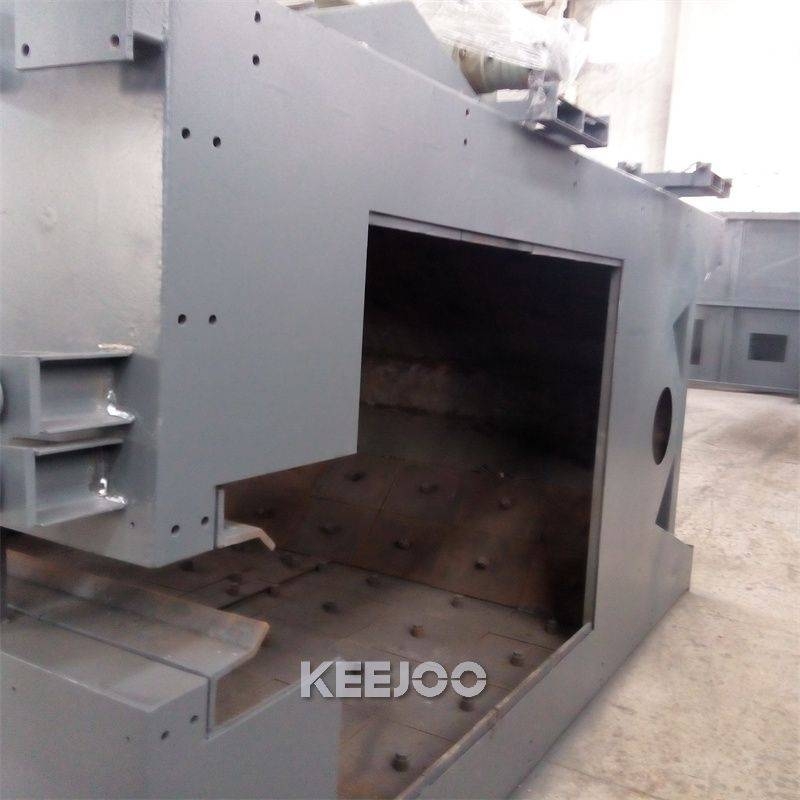

吊钩通过212.jpg


Leave your message

We use cookie to improve your online experience. By continuing to browse this website, you agree to our use of cookie.

Cookies

Please read our Terms and Conditions and this Policy before accessing or using our Services. If you cannot agree with this Policy or the Terms and Conditions, please do not access or use our Services. If you are located in a jurisdiction outside the European Economic Area, by using our Services, you accept the Terms and Conditions and accept our privacy practices described in this Policy.
We may modify this Policy at any time, without prior notice, and changes may apply to any Personal Information we already hold about you, as well as any new Personal Information collected after the Policy is modified. If we make changes, we will notify you by revising the date at the top of this Policy. We will provide you with advanced notice if we make any material changes to how we collect, use or disclose your Personal Information that impact your rights under this Policy. If you are located in a jurisdiction other than the European Economic Area, the United Kingdom or Switzerland (collectively “European Countries”), your continued access or use of our Services after receiving the notice of changes, constitutes your acknowledgement that you accept the updated Policy. In addition, we may provide you with real time disclosures or additional information about the Personal Information handling practices of specific parts of our Services. Such notices may supplement this Policy or provide you with additional choices about how we process your Personal Information.


Cookies

Cookies are small text files stored on your device when you access most Websites on the internet or open certain emails. Among other things, Cookies allow a Website to recognize your device and remember if you've been to the Website before. Examples of information collected by Cookies include your browser type and the address of the Website from which you arrived at our Website as well as IP address and clickstream behavior (that is the pages you view and the links you click).We use the term cookie to refer to Cookies and technologies that perform a similar function to Cookies (e.g., tags, pixels, web beacons, etc.). Cookies can be read by the originating Website on each subsequent visit and by any other Website that recognizes the cookie. The Website uses Cookies in order to make the Website easier to use, to support a better user experience, including the provision of information and functionality to you, as well as to provide us with information about how the Website is used so that we can make sure it is as up to date, relevant, and error free as we can. Cookies on the Website We use Cookies to personalize your experience when you visit the Site, uniquely identify your computer for security purposes, and enable us and our third-party service providers to serve ads on our behalf across the internet.

We classify Cookies in the following categories:
 ●  Strictly Necessary Cookies
 ●  Performance Cookies
 ●  Functional Cookies
 ●  Targeting Cookies


Cookie List
A cookie is a small piece of data (text file) that a website – when visited by a user – asks your browser to store on your device in order to remember information about you, such as your language preference or login information. Those cookies are set by us and called first-party cookies. We also use third-party cookies – which are cookies from a domain different than the domain of the website you are visiting – for our advertising and marketing efforts. More specifically, we use cookies and other tracking technologies for the following purposes:

Strictly Necessary Cookies
These cookies are necessary for the website to function and cannot be switched off in our systems. They are usually only set in response to actions made by you which amount to a request for services, such as setting your privacy preferences, logging in or filling in forms. You can set your browser to block or alert you about these cookies, but some parts of the site will not then work. These cookies do not store any personally identifiable information.

Functional Cookies
These cookies enable the website to provide enhanced functionality and personalisation. They may be set by us or by third party providers whose services we have added to our pages. If you do not allow these cookies then some or all of these services may not function properly.

Performance Cookies
These cookies allow us to count visits and traffic sources so we can measure and improve the performance of our site. They help us to know which pages are the most and least popular and see how visitors move around the site. All information these cookies collect is aggregated and therefore anonymous. If you do not allow these cookies we will not know when you have visited our site, and will not be able to monitor its performance.

Targeting Cookies
These cookies may be set through our site by our advertising partners. They may be used by those companies to build a profile of your interests and show you relevant adverts on other sites. They do not store directly personal information, but are based on uniquely identifying your browser and internet device. If you do not allow these cookies, you will experience less targeted advertising.

How To Turn Off Cookies
You can choose to restrict or block Cookies through your browser settings at any time. Please note that certain Cookies may be set as soon as you visit the Website, but you can remove them using your browser settings. However, please be aware that restricting or blocking Cookies set on the Website may impact the functionality or performance of the Website or prevent you from using certain services provided through the Website. It will also affect our ability to update the Website to cater for user preferences and improve performance. Cookies within Mobile Applications

We only use Strictly Necessary Cookies on our mobile applications. These Cookies are critical to the functionality of our applications, so if you block or delete these Cookies you may not be able to use the application. These Cookies are not shared with any other application on your mobile device. We never use the Cookies from the mobile application to store personal information about you.

If you have questions or concerns regarding any information in this Privacy Policy, please contact us by email at . You can also contact us via our customer service at our Site.