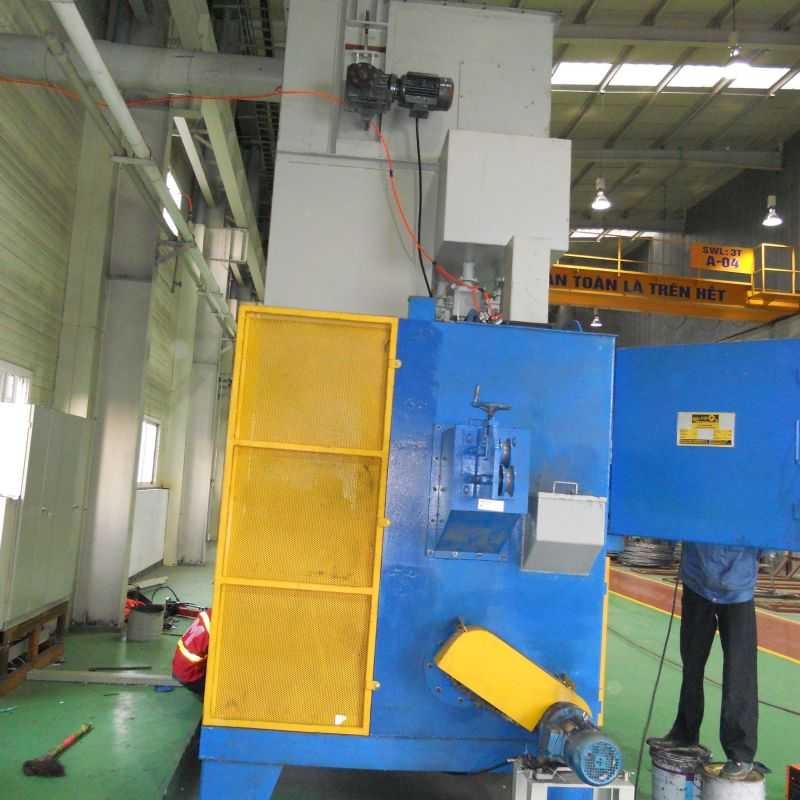
Wire breakage or snapping during the shot-blasting process is typically caused by a mismatch between tension, feed speed, and the condition of the wire, rather than by defects in the wire itself.
To prevent breakage, first ensure the feed tension is correctly adjusted. Excessive tension exerts too much pull, which can easily snap thin-gauge wire; conversely, insufficient tension causes the wire to slacken, pile up, or become knotted and jammed—all of which can also lead to breakage. Tension should be set according to the wire diameter, and a consistent, steady feed speed must be maintained.
Furthermore, avoid sudden changes in feed speed. Frequent speed fluctuations cause abrupt shifts in the stress applied to the wire, leading to fractures or surface damage; therefore, a constant feed speed should be maintained throughout the process.
Before starting operations, inspect the coiled wire and remove any sections that are knotted, twisted, sharply bent, or heavily corroded. Defective segments should be pre-processed or discarded to prevent the wire from snagging or snapping during the feed process.
Adjust the shot-blasting intensity to match the wire thickness. For thinner wires, reduce the shot-blasting flow rate and impact stress to prevent surface damage or stress-induced fractures. Regularly clean the feed guide wheels and channels to remove debris, preventing jams that could cause the wire to snag or break.
By properly controlling tension, maintaining a steady feed speed, and conducting thorough pre-operation inspections, you can significantly reduce the likelihood of wire breakage, thereby minimizing material waste and downtime-related losses.