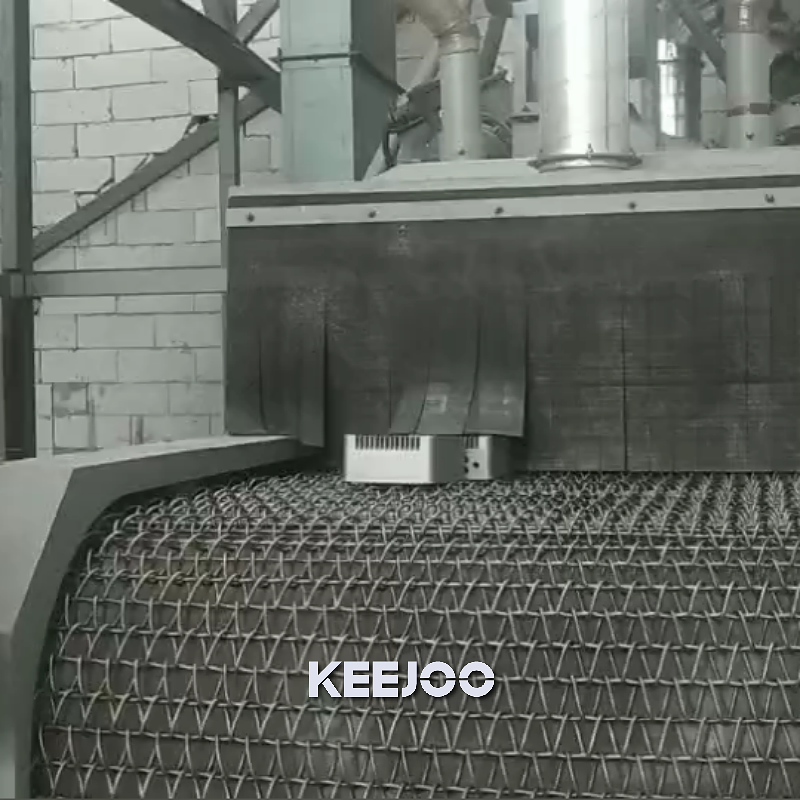
Workpiece deviation on a wire mesh belt shot blasting machine can be triggered by multiple factors, including uneven placement of workpieces on the belt, inconsistent belt tension, or belt misalignment. The detailed causes and corresponding adjustment solutions for workpiece deviation are listed below:
Uneven workpiece distribution Workpieces scattered unevenly across the wire mesh belt will lead to deviation. Rearrange the workpieces evenly on the belt. This operation can be completed manually, or realized through automatic equipment such as sensors and mechanical positioning devices to achieve uniform layout.
Uneven belt tension Uneven tension of the wire mesh conveyor belt causes workpiece offset. Inspect the belt tension and make targeted adjustments to ensure uniform tension across the entire belt. Adjust the tensioning mechanism or install auxiliary mechanical tension stabilizers to maintain constant tension.
Belt misalignment Improper alignment of the wire mesh belt results in workpiece deviation. Check the belt alignment status and calibrate it when needed. Adjust the belt guide rails or install dedicated alignment components to keep the belt running in the correct track.
Belt cleaning and maintenance Dirty or worn wire mesh belts are another factor causing workpiece deviation. Clean and service the belt regularly to clear residual debris and dust buildup. Replace severely worn belts in a timely manner to guarantee stable and smooth operation.
Belt running speed The traveling speed of the wire mesh belt influences workpiece deviation. Set the belt speed to a proper value that ensures stable conveying without workpiece shifting. Adjust the machine’s speed control system to achieve this.
Regular inspection and maintenance of wire mesh belt shot blasting machines are essential to prevent workpiece deviation. Troubleshooting the above causes and carrying out corresponding adjustments can effectively reduce workpiece offset, thus improving the efficiency and processing quality of shot blasting operations.