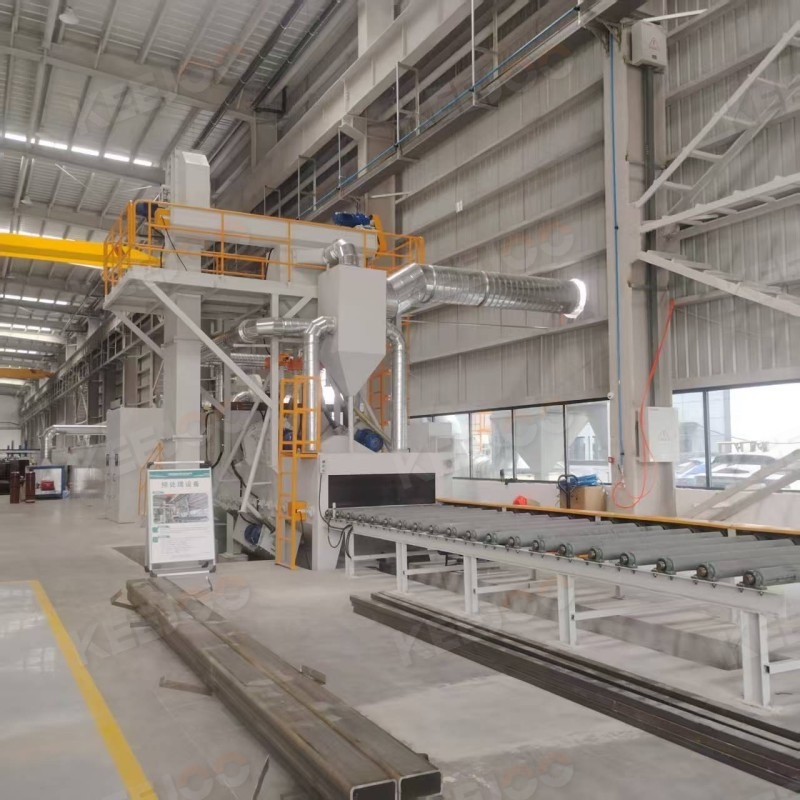
The shot-blasting machine in a steel plate pretreatment line is the core descaling equipment for steel structure manufacturing. It performs descaling and surface pretreatment in a single pass, achieving a cleanliness grade of Sa2.5–Sa3.0 and meeting the surface roughness requirements for subsequent coating. As a piece of heavy-duty, continuously operating equipment, its components—including blast wheels, wear-resistant liners, roller conveyors, and the abrasive circulation system—are subject to constant high-speed impact from steel shot, leading to rapid wear of consumable parts. In many facilities, premature equipment failure, inconsistent descaling quality, and frequent downtime are primarily the result of inadequate maintenance. Implementing a systematic daily and periodic maintenance program ensures consistent processing quality, reduces the consumption of spare parts, and significantly extends the overall service life of the machine.
I. Basic Principles for Safe Maintenance
1. For all maintenance and repair tasks, the **main power supply must be disconnected and a "Do Not Switch On" warning sign must be displayed.** Opening equipment covers or housings while the power is on is strictly prohibited.
2. Before entering the blast chamber or dust collector, ensure the area is properly ventilated and wear appropriate personal protective equipment (PPE), including a dust mask, safety goggles, and work gloves.
3. Blast wheel blades must always be replaced in complete sets; replacing individual blades is prohibited, as it can cause rotor imbalance and lead to severe vibration.
4. Never open maintenance access doors while the equipment is in operation. Safety interlocks and emergency stop mechanisms must never be bypassed or disabled.
II. Routine Maintenance (Pre-shift Inspection + Post-shift Cleaning – Required Daily)
Pre-startup Inspection
1. **Blast Wheel System**: Check that all mounting bolts for the blast wheels are secure. Inspect the blades, control cages, and impellers for wear; replace any components that exceed wear limits. Verify that safety door interlocks and emergency stop buttons are functioning correctly. Monitor the no-load current of the blast wheel motors; if the current rises abnormally, investigate potential issues such as abrasive blockages or damaged internal liners. 2. **Roller Conveyor System**: Inspect the roller surfaces for any trapped steel shot or mill scale. Ensure smooth operation during variable-frequency drive (VFD) running, checking for any sticking or abnormal noises. Examine the sealing curtains at the entry and outlet ports; replace them promptly if damaged, as tears can lead to significant leakage of steel shot. When processing thin plates, pay special attention to the condition of the rollers to prevent the plates from sagging or deforming.
3. **Abrasive Circulation and Air-Wash Separator**: Maintain the abrasive storage hopper at approximately 2/3 capacity; replenish the steel shot/grit mixture as needed. Observe the separator to ensure the abrasive curtain is spread evenly—an uneven curtain will impair the separation of broken shot. Clear any large pieces of mill scale or debris from the screen mesh. Listen for any unusual noises coming from the bucket elevator or screw conveyor.
4. **Dust Collection System**: Monitor the pressure differential across the dust collector and ensure that dust does not accumulate in the collection hopper. Verify that the pulse valves are functioning correctly and check the ductwork for any air leaks.
5. **Electrical System**: Check the control cabinet for dust accumulation; ensure that sensors and photoelectric switches are free from obstructions, and verify that the equipment is properly grounded.
End-of-Shift Shutdown and Cleaning
1. Remove rust scale and broken shot from the floor gratings of the shot-blasting chamber to prevent the screw conveyor from becoming clogged.
2. Clean any residual steel shot or mill scale from the brushes and roller surfaces in the blow-off/cleaning section.
3. Empty the dust collector hopper. It is recommended to keep the dust extraction fan running for an additional 5–10 minutes after shutdown to clear any remaining dust from the ductwork.
4. For lines equipped with painting and drying pre-treatment, clean the spray gun nozzles and the paint-mist filter media at the end of the shift to prevent paint residue from hardening and clogging the lines.
5. Maintain operational records, including conveyor speed, shot-blasting machine current, the amount of abrasive replenished, and any equipment anomalies. ## III. Weekly Maintenance
1. Inspect the wear-resistant liners (HARDOX or high-chromium alloy plates) inside the blast chamber. Pay special attention to high-impact zones and replace any liners that show signs of wear-through.
2. Check the dust collector filter cartridges or bags; an excessively high pressure differential indicates clogging. Also, inspect them for any damage or tears.
3. Sample and test the quality of the abrasive media. If the proportion of broken media exceeds 10%, the media must be screened and replenished with new material to ensure the steel plate surface roughness remains stable within the range of Ra 6.3–12.5 μm.
4. Apply lithium-based grease to the roller conveyor and elevator chains, and adjust their tension.
5. Verify that all flanges and connecting bolts across the entire machine are tight. Repair any air leaks or worn sections in the ductwork.
6. Adjust the gap between the cleaning brushes and the steel plates; replace the brushes if they are severely worn.
IV. Monthly Maintenance
1. Disassemble and inspect the blast wheels (shot-blasting units). Measure the wear on the blades and verify the dynamic balance of the impellers. Check the blast wheel spindle bearings for abnormal temperature rise or noise, and apply grease as specified.
2. Check the lubricating oil in the gear reducers. For new equipment, change the oil after the first 100 hours of operation; thereafter, replace the oil every 500 hours.
3. Re-tighten all bolts on the blast wheel bases, the blast chamber structure, and the elevator base.
4. Measure the insulation resistance of the motors (must be ≥ 0.5 MΩ). Inspect cables and terminal connections for signs of aging or oxidation.
5. For systems equipped with painting and drying units: service the high-pressure airless spray system and thoroughly clean the paint supply lines. Inspect the heating elements and temperature-control thermocouples in the drying unit.
6. Clean dust from the lenses of photoelectric sensors and verify the signals from the limit switches. ## V. Quarterly In-depth Maintenance
1. Replenish or replace the grease in all heavy-duty bearings throughout the machine.
2. Conduct a thorough inspection of the chamber protective liners; repair worn areas via build-up welding or replace the liners entirely.
3. Clean accumulated dust from the interior of the dust collection ductwork; inspect the dust collection fan impeller for wear and perform dynamic balancing if necessary.
4. Re-calibrate the airflow in the air separator and the opening of the abrasive supply gate to ensure a consistent rust-removal standard (Sa 2.5/Sa 3.0).
5. Clean dust from the heat exchanger air ducts in the drying section to eliminate fire hazards caused by dust accumulation.
VI. Annual Overhaul and Maintenance
1. Disassemble and inspect the shot-blasting units; replace worn-out bearings and all consumable parts; perform non-destructive testing (NDT) on the impellers.
2. Replace aged dust collector filter bags and damaged air ducts.
3. Inspect and repair worn components in the roller conveyor, screw conveyors, and bucket elevator; straighten any deformed rollers.
4. Test the PLC, variable frequency drives (VFDs), and touch screens; tighten electrical terminals; replace aged or degraded cables.
5. Perform rust removal and apply anti-corrosion treatment to the entire machine; re-check anchor bolts; conduct a full-system, no-load operational test.
VII. Specialized Maintenance for the Painting and Drying Units of the Pretreatment Line
A complete steel plate pretreatment line includes shot-blasting, automatic painting, and drying sections—areas where malfunctions occur most frequently:
1. Painting Booth: Clean the spray gun nozzles after every shift; periodically replace the paint-mist filtration media; regularly inspect explosion-proof components and ensure no paint residue accumulates.
2. Drying Section: Regularly clean dust from the air ducts; inspect electric or gas heating components; calibrate temperature control instruments to prevent fire risks associated with dust accumulation. ## VIII. Quick Troubleshooting for Common Faults
1. **Excessive vibration of the shot-blasting unit:** Usually caused by uneven wear of the blast blades. Blades must be replaced in pairs; never replace a single blade.
2. **Deterioration in descaling quality or inconsistent surface roughness:** First, check for a malfunctioning air separator or an excessive amount of broken shot; second, check for insufficient abrasive media or an excessively high roller conveyor speed.
3. **Abnormally high consumption of steel shot:** Check for damaged sealing curtains, holes in the blast chamber liners (causing shot leakage), or poor separation efficiency in the separator.
4. **Excessive dust in the workshop or high pressure differential across the dust collector:** Check for clogged or damaged filter bags, air leaks in the ductwork, or a dust hopper that is completely full.
5. **Steel plate misalignment or jamming:** Check for seized roller conveyor bearings, uneven wear on the roller surfaces, or malfunctions in the steel plate detection sensors.